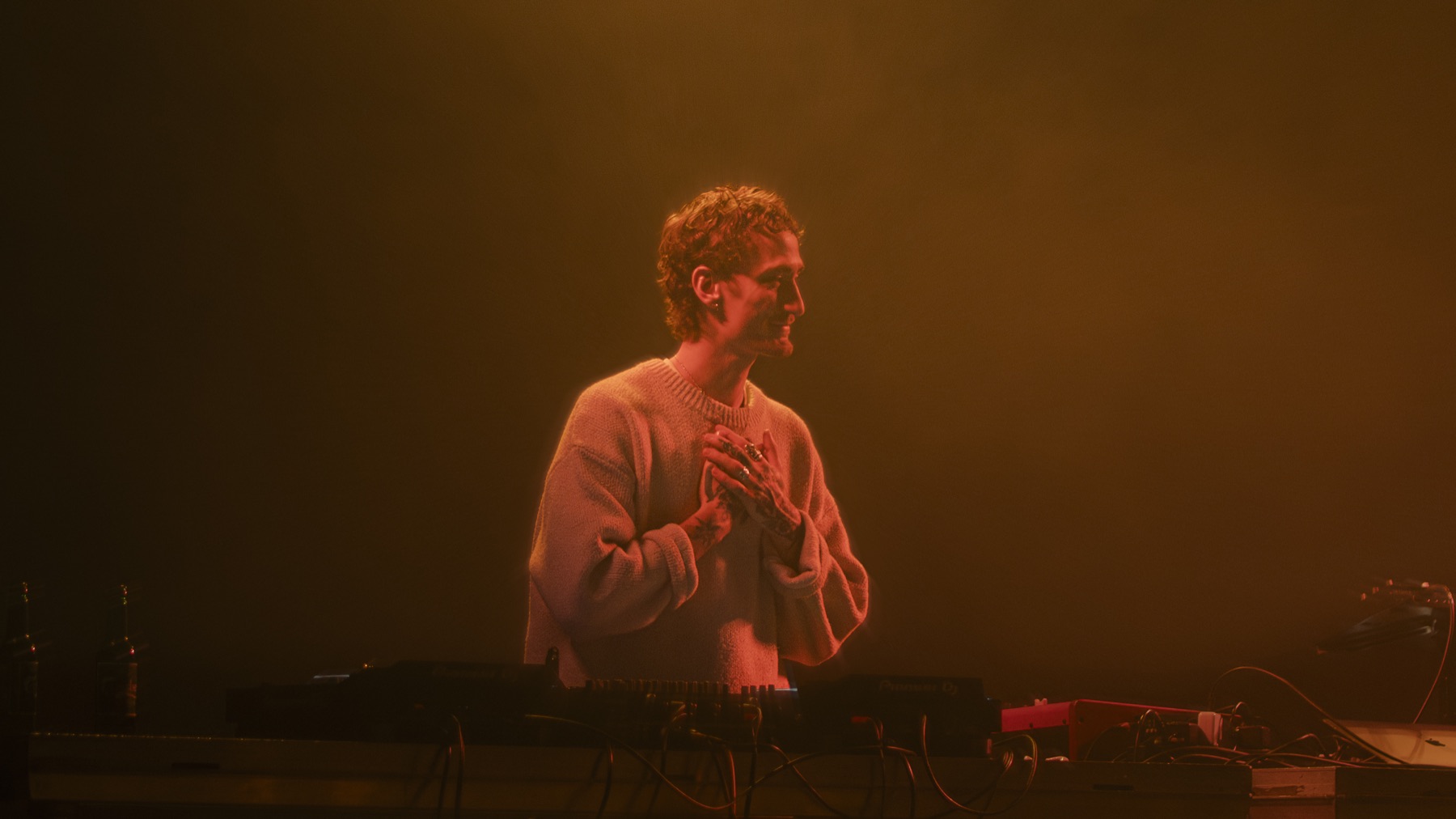
Questions by Rich Vibert
Answers by Liam Berg
Introduction
Liam Berg is a musician, artist, and incredible human from Oslo, Norway.
Liam has been around instruments, music, and art all his life. In January 2025 he wrote an Instagram post “This year is gonna be all about music, and i have so much sonic love to share with you.” Since then he’s been making and producing some incredible sounds.
In this interview we talked about his journey into the world of music, how a piece of music slowly acquires an identity through hundreds of small decisions, and how the commercial element of music is an unnatural but perhaps beneficial aspect of the creation process.
What led you into the world of creating music?
I studied acting and theatre production for most of my early twenties. I had always been making music and drawing on the side, and it gradually became clear that it was where I could disappear for hours. They revealed themselves as the places where I most enjoyed spending my time.
After finishing studying, I was picking up a few different things and had the time to think about what I wanted to do. I began working as a composer and sound designer for independent theatre shows. I had an amazing network of friends making shows, and they needed music for their shows, so I was able to do that professionally while developing Liam Berg as its own artist project.
Was music always present when you were growing up?
There was always a lot of music around me. My dad and siblings played guitar, and my dad ran a vintage guitar and specialist instrument shop for 18 years.
I was the youngest in the family, though, and I sort of resisted following them at first. I was more introverted and enjoyed reading and drawing in my own space. As a teenager I started doing some basic music production with friends - just downloading music and trying to make new stuff with no plan.
I only started playing guitar seriously when I was around twenty. During covid, I started learning piano and became much more serious about honing my music production skills.
Playing an instrument and producing music belong to the same world, but they are different experiences. What draws you to each?
Sitting with an acoustic instrument feels complete in itself. If I feel sad or lost, I can sit at the piano, play, and feel better afterwards. It makes me present. It genuinely feels healing.
Production can do that too, but it is much more technical. You are orchestrating layers, instruments and textures. When an idea begins to work, I get super excited and am on a high. I feel great for the whole day.
The difference now is that production is more tied to the idea of a career. It is connected to surviving, earning a living and functioning in society. When I simply sit down and play music myself, it feels free of all that.
Does that freedom help ideas appear?
Yes. If I sit with a guitar without thinking that I have to make a piece of music, something often emerges. My mind becomes freer. I might record it on my phone, transfer it to the computer, and begin playing with it. That becomes the initial inspiration.
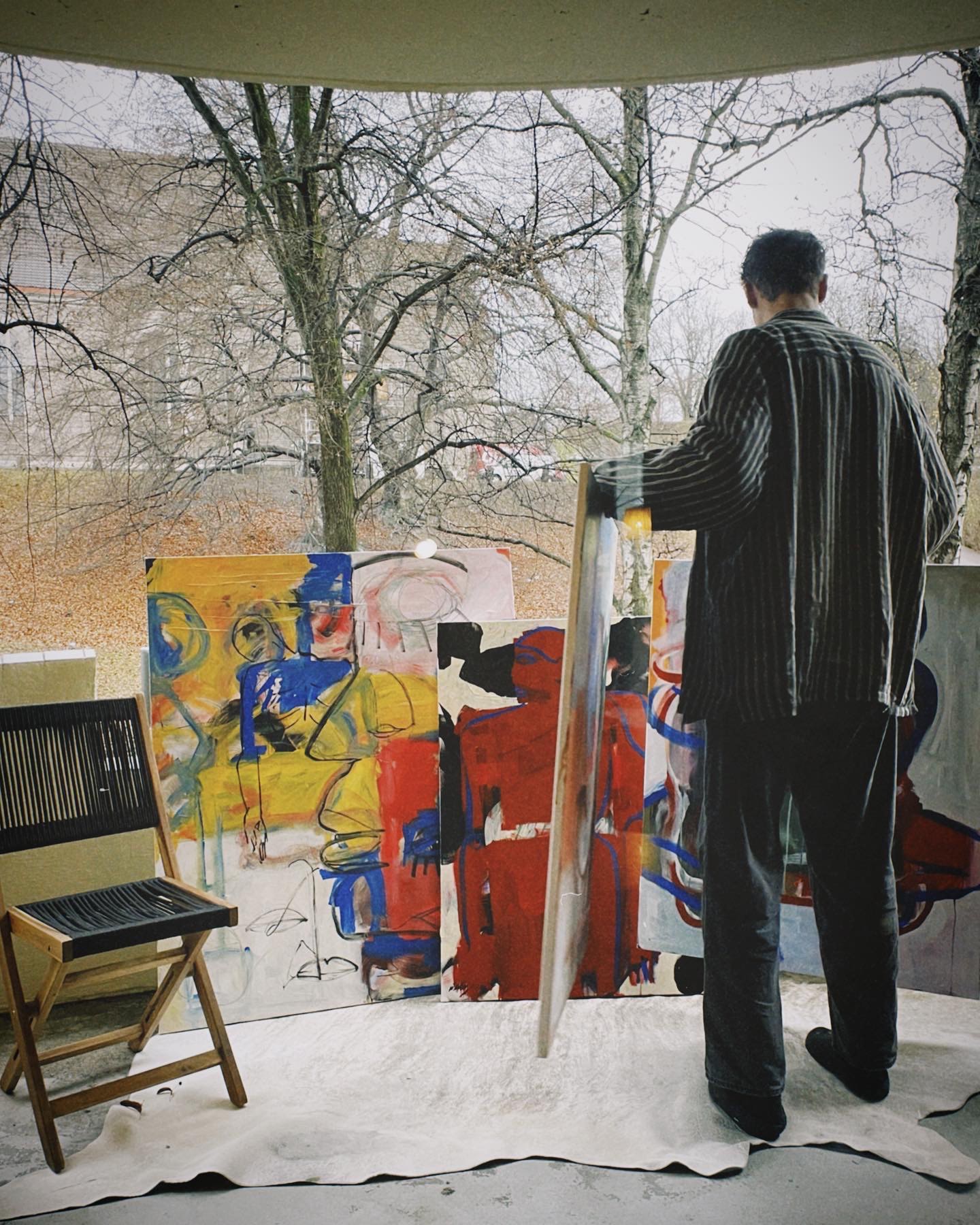
You also paint. What makes you turn towards music on one day and painting on another?
Accessibility, mainly. With painting, I have to rig up a canvas, prepare the paint, and find the brushes. If I had a space where the canvas was always ready and I only had to pick up a brush, I would probably paint much more.
I hope that one day I can have a space where music and painting can exist beside each other, ready at the same time.
What need do those practices satisfy for you? Are they a form of expression, escape, or something else?
There is definitely an element of escape. I disappear from the world for a moment.
But I am also dependent on making stuff. Making stuff that I believe is good. If a month passes without that happening, I become depressed. My confidence falls and it can begin to spiral. I am dependent on making things, whether that is art or music.
In January 2025, you wrote that the year would be “all about music.” Was there a particular moment behind that decision?
There was. During the previous autumn, I had made a couple of songs for a new album and felt that I was finally making something good. One day, I searched online for contact details for people in the industry and sent around fifty or sixty emails.
I found the email address of Joey McCarthy, who later became my manager, through Aaron Hibell’s Instagram bio. I sent him a short introduction and some new music. He replied and asked whether I could speak on Monday. During that call, he essentially asked whether I wanted to work together.
I was over the moon. We spent the rest of that autumn building a plan and thinking about the direction of the project. That was the context for the post. It felt as though music was becoming something I could commit to fully.
One of the songs you sent eventually became “Waves.” What happened to the other?
ListenWaves Open player
The other was called “Echoes.” It was going to be part of the album I am releasing now, but I think I ruined it.
I kept returning to it as I learned new techniques and became better at production. Each time, I tried to improve it. Eventually, it became overworked. I could no longer untangle everything I had done.
That happens in painting too. You feel that something is becoming good, so you keep adding layers and layers until you go too far. In music, there is technically an undo function, but after two hundred small steps and changes, you cannot always find your way back.
Could that piece reappear in another form one day?
Definitely. I do not have a rule that says something is permanently finished or abandoned. Parts of it could return.
Do you need other people to confirm that your work is good, or can you recognise it yourself?
It is a feeling I have myself. But I also love playing new things for friends and family sometimes just to listen through their ears in a way, it often gives me much needed direction in terms of the way it flows, since music is meant to be shared and all.
When I listen to music by artists I admire, I often cannot explain exactly why something works. I simply feel that it does. I compare my own work with what I listen to and ask whether it is close to the place I am trying to reach.
A piece is never perfect, but I can feel when the idea is as good as I am currently capable of making it. I am learning to stop there instead of overworking an idea and ruining it.
Do you ever feel that a track is completely finished?
Yes, I can feel that it is one hundred percent finished. The problem is that if months pass by before it is released, I start thinking about it again.
So there’s this window. When I finish something, it belongs to that moment in my life or that season of the year. Later, I have changed, so my relationship with it changes too. A piece can feel completely right to me when it is made and less certain by the time it reaches the world.
“Distortion” is currently your most played track on streaming platforms. Is it also one of the pieces you feel closest to?
ListenDistortion Open player
Not really, which is interesting. It is the fastest track I have ever made. I made it in about an hour while testing a production technique. I wasn’t even plugged into anything; I was just making it on the computer.
It came about so fast, so perhaps it is more naturally me than the songs that take months. It arrived so quickly that I did not have time to interfere with it. At the same time, I do not recognise myself in it as strongly as I do in some other tracks. I am very fond of it because it has reached a larger audience, and I am grateful for what it has done for me, but it’s not my favourite track.
I suppose there are different forms of being happy or proud with what I make. One comes from the artistic expressive part of making something you love, and another comes from knowing that the work has reached and affected people.
Has treating music more seriously as a career changed your creative process?
I try to create a routine, but inspiration still moves in cycles.
For example, these last five or six months, I have struggled to make anything I thought was good. I have been learning a lot of new stuff and getting better technically on certain aspects of production, but I feel the ideas themselves have not been good. I have never experienced such a long period in which I genuinely wanted to make music and kept trying, but nothing happened.
Usually, when I cannot make anything good, I also lose the desire to try. I live my life and gather inspiration from that. Over the course of a year, I tend to have one or two longer chunks of time when I can make things every day. I cherish those periods and max out on them.
But then between these periods, I prepare for when the next wave comes. I develop my tools, and make sure I have new sounds ready for when ideas begin arriving again. (and I’m currently in a new wave of inspiration and making lots of new stuff)
What does your routine actually look like?
I wake up early. When I’m not in the inspirational wave, I’ll eat breakfast, go to the gym in the afternoon, and just try and work for a reasonable amount of time.
When I am inside an inspirational wave, everything changes. I make coffee, sit down and just make stuff all day. Almost forgetting to eat and drink. I neglect myself because I feel that I have to capture the idea as quickly as possible, even though logically it’s crazy because I know the idea isn’t going to disappear if I go to the bathroom. But I just feel I have to get the idea down as fast as possible.
The routine is most structured when I am not producing much. During the productive periods, the work takes over.
What do you think leads to an inspirational period?
I wish I knew, because then I could create the conditions deliberately.
My equipment has not changed. My surroundings have not changed. I have not changed. One day, every decision flows harmoniously and the next day nothing works. I try something and it simply hits a wall. The work does not explain why.
It is only a feeling.
Have you learned to accept and trust those cycles?
More than I used to. When I was younger, I became very stressed when I wasn’t in an inspiration cycle. “Why can’t I make it?”, “What’s happening?”, “Have I lost it?”
After experiencing the same cycles for years, I know that another wave will come. I can wait without panicking as much. It is easier at the moment because I know I have a lot of music and sounds ready for the next wave. I might feel differently if nothing was ready.
Does everything else in life feel different during an inspirational period?
It is amazing. Life feels easy. Everything seems as though it is going to work out. I love everything, the colours look brighter, and the whole world feels more open.
When the work is not going well, everything feels gloomier.
Does living in Oslo, with such extreme seasonal changes, affect your work?
Not as much as people might expect. I love the seasons. I love the warmth and light of summer, but I also love the dark, cold winter. Each one allows different things.
Winter is good for staying inside and going to the sauna. Summer is for being outside and moving through the city. I have grown to love where I am from much more than I did when I was younger.
During the inspirational periods, what does the creation of music look like?
I rarely have a complete idea in my head of what I’m trying to make. My process is more about starting somewhere and following what happens.
When painting, I almost always start by moving the brush around the canvas until all the white is gone. This stage is completely random, and I don’t give the colors or the strokes any thought at all. I usually try to stick to 1–2, maybe 3 shades, just to get something to latch onto when I continue after it dries.
With music it is less like filling the whole canvas at once and more like placing one dot, then responding to it. I might start with almost anything: pulling in the sound from a dock, or a piano recording on my phone from ages ago. And then that will reference something in my mind so I’ll reach for a melodic instrument and start playing something super simple and open and inviting. And then I’ll mess around with that and add some effects and some texture to start to create an atmosphere. Perhaps it’s haunting or melancholic or something else. And then I get follow up ideas. So I’ll just go with it and see where it takes me.
The piece reveals itself through that process.
At what point does it become yours? Where does your creative identity enter?
It’s quite a profound question. I think it comes from all the small decisions along the way. All the actions I do take, and all the ones that I don’t. The layers of this sort of become the identity.
Within the first thirty minutes or hour, I usually have some chords and some sounds, and feel that I might have the foundation for a song. At that point, I can often tell whether there is something worth continuing. I might realise that it wants to become a slow, immersive, melancholic piece, which is often where my music goes.
Then the identity is there and the idea is more clear. The remaining work is about whether I can bring it to its full potential.
ListenCarousel Open player
When you have finished a piece of music and listen back, does it ever tell you something about yourself that you didn’t know before?
For sure, or at least it’s become that way in recent time - as I’m learning to interfere less or trying to force where a song might be going, I discover that I have much wider palette of expression than I initially believed, and that is sort of like looking in a mirror when years have passed and you suddenly realise you’ve gotten older and become shaped by the different experiences that life has thrown at you, if that makes sense.
Does your growing technical ability with acoustic and digital instruments change the decisions available to you?
Definitely, it increases the number of choices I have available to me as I make decisions along that creative process.
But just importantly, recognising what a piece can become whilst it’s being created is itself a skill I’m getting better at. More often now I’m able to be aware of and avoid making the wrong creative decisions. I feeI that I make better decisions more often. And as my skills and tools grow, I have more ways to reach the thing I can sense.
Is there a different “dimension” of creativity when you’re thinking about an album or EP compared to an individual track?
I think artists carry certain preconceived ideas about what being an artist means. We believe we are supposed to have albums and a recognisable sound. That expectation probably shapes the process before we realise it.
For me, I make one track and it lives somewhere on my hard drive. Then I make another, and sometimes I feel that they live together in the same world. That begins a new journey. I lean into the relationship between them. I start thinking about what the world they both live in looks like and whether other pieces belong in that world too.
This world, as a potential album, tends to reveal itself to me rather than me trying to make it. Some songs feel completely self-contained in a perfect little world of their own, and they don’t need further context to exist. But with collection albums, one song might become a wayfinder or a north star of a journey. Eventually, I might have ten pieces that feel as though they belong together.
Once you sense that an album is emerging, do you begin shaping new tracks to fit it?
To some extent. When I feel that I have a collection of songs which might be halfway through to what I believe could be an album, there can be a small element of molding new songs, for example making them faster or more danceable.
But I try to let each song be whatever it wants to be. It can be a difficult balance sometimes.
To what extent do you want your music to change whilst preserving your identity?
It is less that I consciously want difference and more that, once I have explored something, I feel finished with it.
For example, the first album Make Room Come Change that sort of established the Liam Berg project, used a lot of sampling of songs and vocals. It covered a huge range of tempos and different kinds of listening. Some tracks were deeply introspective, while others were more outward-facing. It felt like it was a really broad palette.
The album I am releasing soon, Resonance, is more instrumental and cohesive. The tracks occupy a narrower range of tempos and are trying to express just one feeling. Whereas the newer stuff I am making now has a different direction: higher tempo with more vocal phrases and structures that work better in a live club setting.
I do not want to repeat the same thing. Once I have brought one idea into the world, I feel that I have something new to create. I don’t want to do the same thing again.
Has performing live influenced that change?
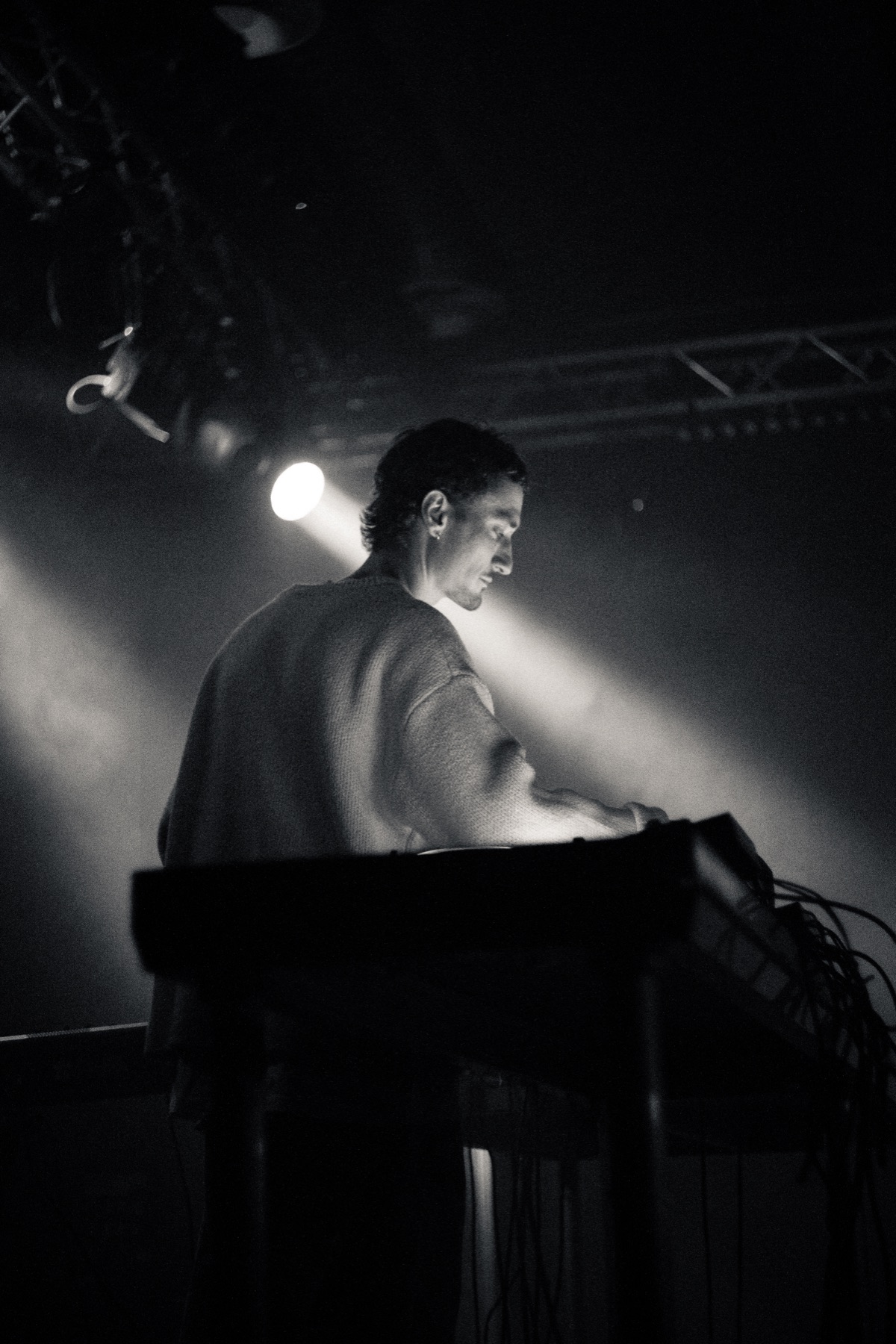
Completely. I played a few DJ sets and realised how slow my music was. Not in a bad way, because it was exactly what I had wanted to make at the time. But performing live has made me want to create more specifically for that environment.
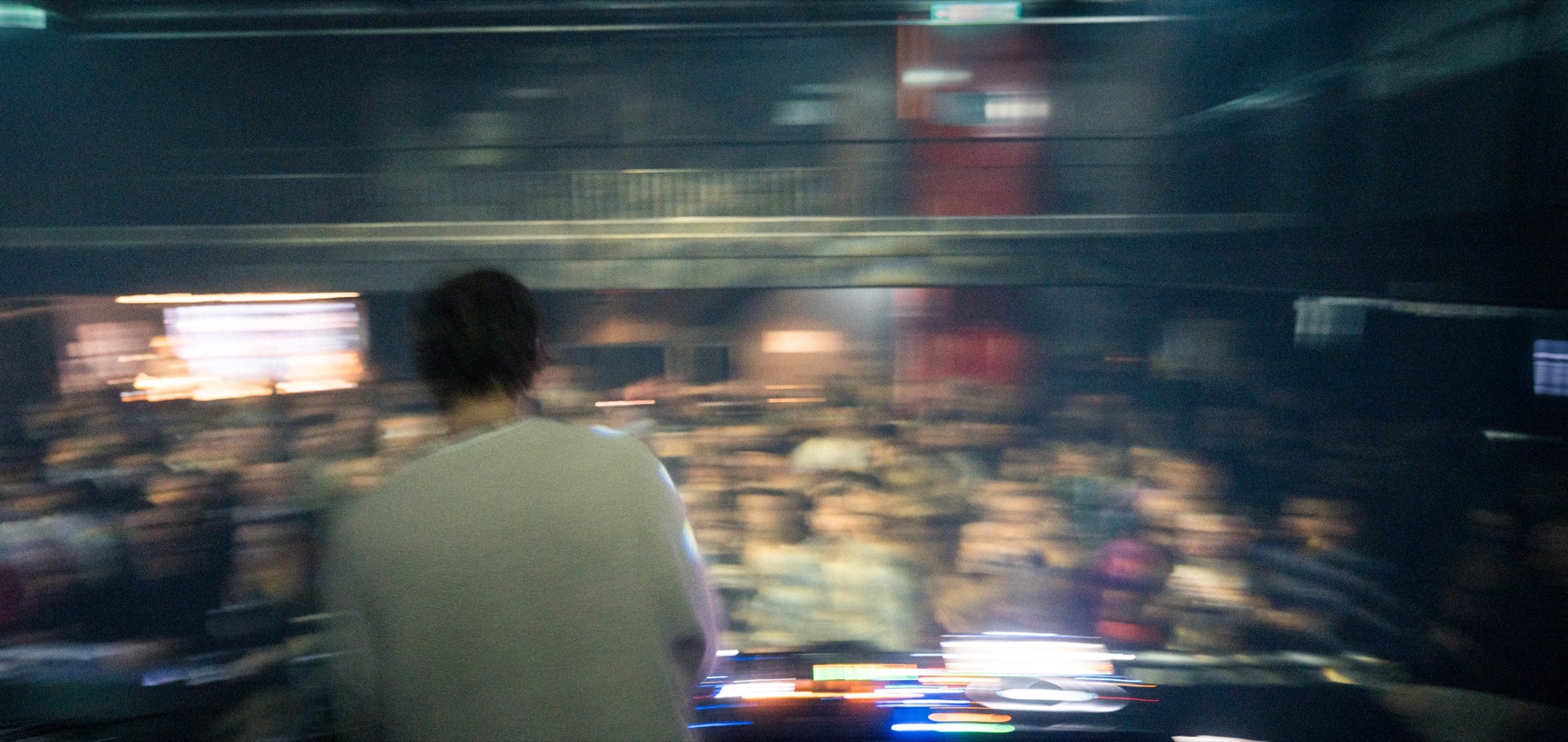
Does performing live give you a different feeling of fulfillment in your creative work?
It is an unmatched feeling. You put so much love and attention into the music, and then you play it in a room with other people that react positively and experience a feeling of “togetherness”.
It’s an extremely addictive feeling. It’s difficult to describe. It makes me feel that this is what I want to do for the rest of my life. It’s completely fulfilling. If I could choose, I would do it every day.
What type of creativity goes into a live performance?
If I’m supporting another artist, I try to tune into what the main artist will do, what kind of audience they have, and what experience is trying to be created.
I do not want to arrive, play my music without considering the context, and leave. I want to create an arc that leads naturally into the main performance.
When I supported Aaron Hibell in Amsterdam, for example, I knew he would play hard and his set would be kind of intense. I knew I had to get the audience up to that point by the time I finished, so I selected music that would take them there.
When supporting other artists, it can be such a gratifying job because these artists have already built a fanbase. So I already have all these amazing people that want to come and listen to music. And I have an opportunity to help create a good show for them.
Finally, we’ve talked about creativity and expressing your identity, but artists also need to make money to live. Does that more commercial pressure interfere with creativity, or can it also be useful?
Making something is such a pure, human activity. Building a career and monetising the result is something society has attached to the output.
It can push you, which is sometimes good. If we lived in some strange utopia without any external pressure, it might be easy to work indefinitely and never finish anything.
But pressure also has weight. During the last six months, I often felt that whatever I made had to be “good.” But that is not a healthy state for creativity. You need to be free for creativity to reveal itself.
At the same time, it is exciting to see something you have spent years developing begin to function as a career. If I can support myself by touring and making music, I cannot imagine a greater achievement for my life. It is the only thing I can see myself doing and feeling completely happy.
I am grateful that these goals exist, even though it does not fit naturally with the creative process. Like most things in life, it contains both good and bad sides and it’s important to find comfort in the balance.