Questions by Rich Vibert
Answers by Tomotsugu “Tomo” Uesugi
Introduction
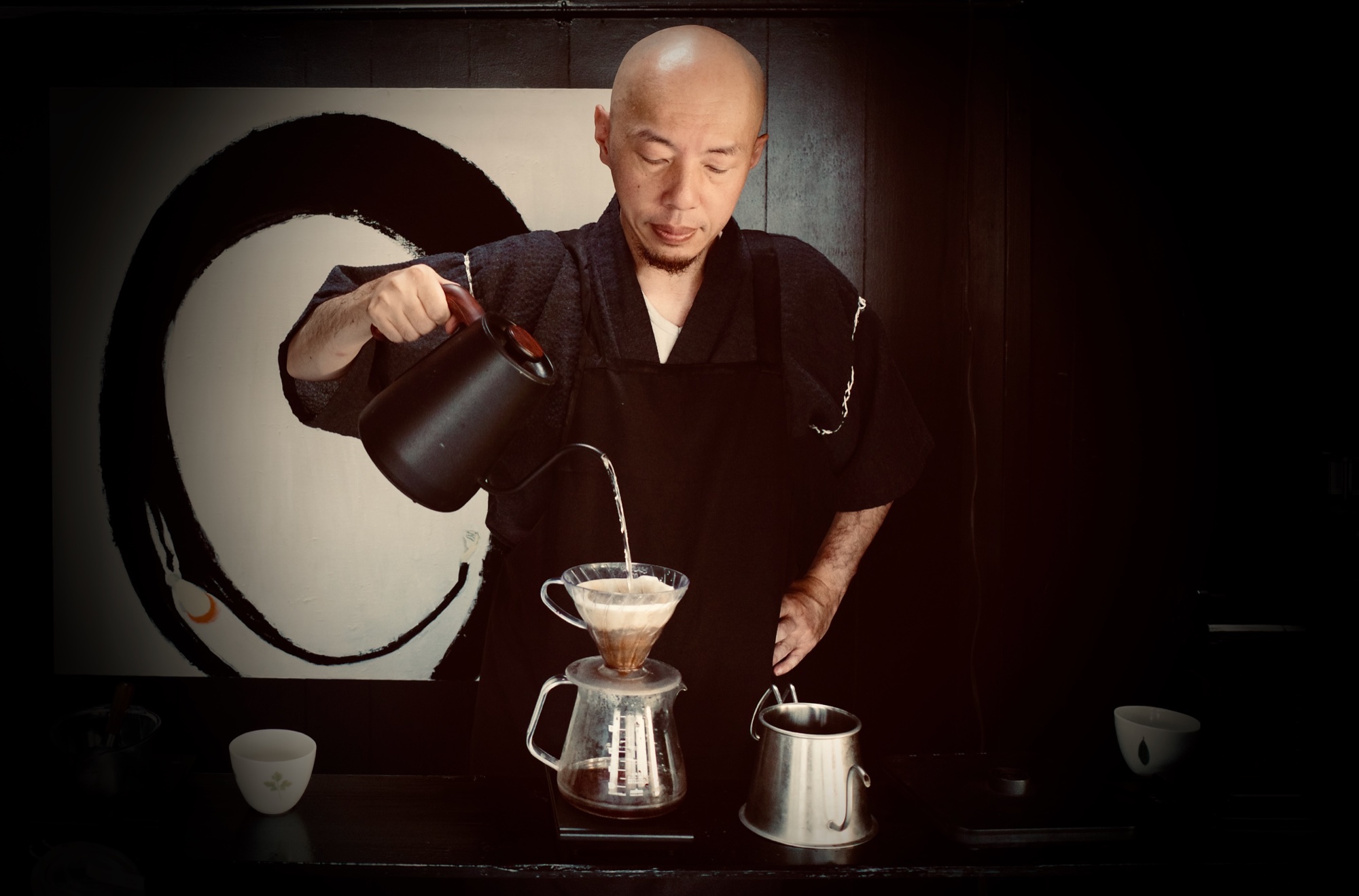
Tomo is an artist who expresses his work in many forms. One of those forms is his café: a uniquely tranquil coffee shop in Kyoto, Japan.
His surname has roots in the Uesugi samurai clan (上杉氏), which at its peak was one of the most powerful in Japan from the 14th to the 17th centuries. Tomo has enjoyed drawing and studying Japanese art since childhood, developing his skills independently before moving to California and encountering a whole new world of work.
After returning to Japan, Tomo found peace and fulfilment in meditation, as well as a deeper appreciation of coffee. Zen Coffee emerged. It is a café, a place for meditation and, in Tomo’s mind, one of his artworks.
Over a hand drip, with orin temple bells chiming every so often in the background, we spoke about inheriting a devotion to painting, learning to question beauty, refusing to create for the market, and finding a life in which art and work could finally support one another.
Tomo-san, tell us a bit about yourself.
My grandfather was a traditional Japanese painter. Before the Second World War, there was much more work available for painters in Japan.
Japan had many traditional arts: ikebana, the tea ceremony, calligraphy and scroll painting. My grandfather painted hanging scrolls and designed special kimonos. Kimonos were popular and expensive, so he could make a good living from that work.
But after the Second World War, Japanese people stopped wearing kimonos and “normal” clothes became popular, with brands like Uniqlo. It became very difficult for him to provide for his family as a painter. Even so, he continued with it and never did any job other than painting. That made a strong impression on me. I wanted to become a painter like him.
I have enjoyed drawing and studying Japanese art since childhood. I developed my skills independently through self-study rather than formal art education. Later, I moved to San Diego in the United States. I felt there were more opportunities for artists in places such as the US; very few people buy art in Japan.
Soon after I arrived, I visited the Museum of Contemporary Art San Diego. I was shocked at what I saw. Many of the paintings looked ridiculous to me, like they had been made by children. They seemed to have no technique or skill involved. Until then, I had understood beauty mainly through craftsmanship: how much time an artist had spent studying, how dedicated they were to each painting, and how skilfully they could make something. Contemporary art placed much more importance on the concept, the process, and the discovery of a new kind of beauty.
That made me ask myself: why do I consider one thing beautiful and another thing not beautiful? Contemporary art had a philosophy behind it. After that, I became interested in creating something genuinely original and something that was true to me.
“I became interested in creating something genuinely original and something that was true to me.”
How did your appreciation for art change after moving to the US?
Once I understood how seriously the artists approached their work, I began to appreciate it more. There was an idea and a philosophy behind it. Beauty is not only one thing; we can find many different kinds of beauty.
I became particularly interested in the philosophy of art. Even now, when I make something, I try to be honest with myself and ask why I am making it and why I think it matters.
So what is “art” to you?
That is a good question. I think art is closely connected to religion and philosophy. It is something created by human beings because we have language.
Language allows us to record history and imagine the future. Because of language, we understand the past, and we know that one day we are going to die. So human beings worry about the future and about death. Religion developed partly to reduce that fear and to explain what might happen afterwards. Art is also deeply connected to that fear and to those questions of what happens next.
Many religions use images to describe another world, death, salvation, or the path towards a better existence. Mandalas and Christian paintings are examples. They show a possible future and explain how people might reach it.
The meaning of the word “art” has changed over time. In Japan, we had painting and many forms of craftsmanship, but we did not necessarily group them together under the modern concept of art. Painting could be part of daily life, religion, decoration, or craft.
Art reflects the mind of an age. The meaning can often change across time and across different cultures. It shows how people see themselves, what they value, and what kind of future they want. Artists often have a desire to create something new—a page in history that did not exist before. That is why I enjoy studying art history. Art records how society changes.
“Artists often have a desire to create something new—a page in history that did not exist before.”
After understanding art in this new way during your time in the United States, why did you return to Japan?
At university, students had critiques where they explained their work, their personal history, their cultural background, and how that all related to their art. Many of the students came from very different places, so their ideas and art were very unique and they were good at expressing those ideas.
But in Japan, people often share the same context, so we do not explain it. When I was in America, I realised that I could not clearly explain my own Japanese background because I had never needed to put it into words.
I decided that if I wanted to create original art, I needed to understand Japanese culture more deeply. That was one reason I moved from Osaka to Kyoto, to help create a new image of myself. I began practising Zen meditation when I moved to Kyoto, partly to understand the culture and partly to develop greater concentration.
There is also something sometimes called self-orientalism: presenting samurai, Zen, or other parts of Japanese culture in a simplified way for commercial purposes. I did not want to use my culture like that. I wanted to understand it honestly and make work that was true to myself, not simply use an image to make money.
I still make art and want to create original work. Zen Coffee is also part of that art. I love coffee, and this place is one way of interpreting and expressing Japanese culture.
Do you remember the moment when you decided to create Zen Coffee?
I had spent almost twenty years trying to survive as an artist while doing many part-time jobs. I wanted to be a professional artist, but it was very difficult.
Making a living from art can create a tension between what is commercially popular and what an artist genuinely wants to make. For me, it was important not to let popularity determine my work. I wanted to remain true to myself.
Eventually, I wanted a different way of working: a place of my own where I could make decisions independently and combine my different interests. That became Zen Coffee.
Kyoto already has many incredible coffee shops. What did you want to do differently?
I wanted to bring together my understanding of Western culture and Japanese Buddhist culture.
Eating in traditional Buddhist culture is almost a ceremony. Historically, Japan was strongly influenced by Buddhism. Food was treated with seriousness and appreciation because another life, or another person’s work, had made the meal possible.
This attitude still exists in the phrase itadakimasu (いただきます), which people say before eating. It is often translated as “thank you for the meal,” but the feeling is deeper. It means that I humbly receive this food and allow it to become part of my body. It expresses gratitude to the ingredients, the people who produced them, and the life involved.
It also contains an awareness of death. Eating means receiving life. In old Buddhist practice, monks ate quietly. They did not complain about the taste. They chewed slowly and paid complete attention to the act of eating.
There are traditional verses recited before a monastic meal. They ask you to consider where the food came from, who made it, whether you are worthy to receive it, and why you are eating. The purpose is not simply pleasure. You eat so that you can continue your practice and move towards awakening.
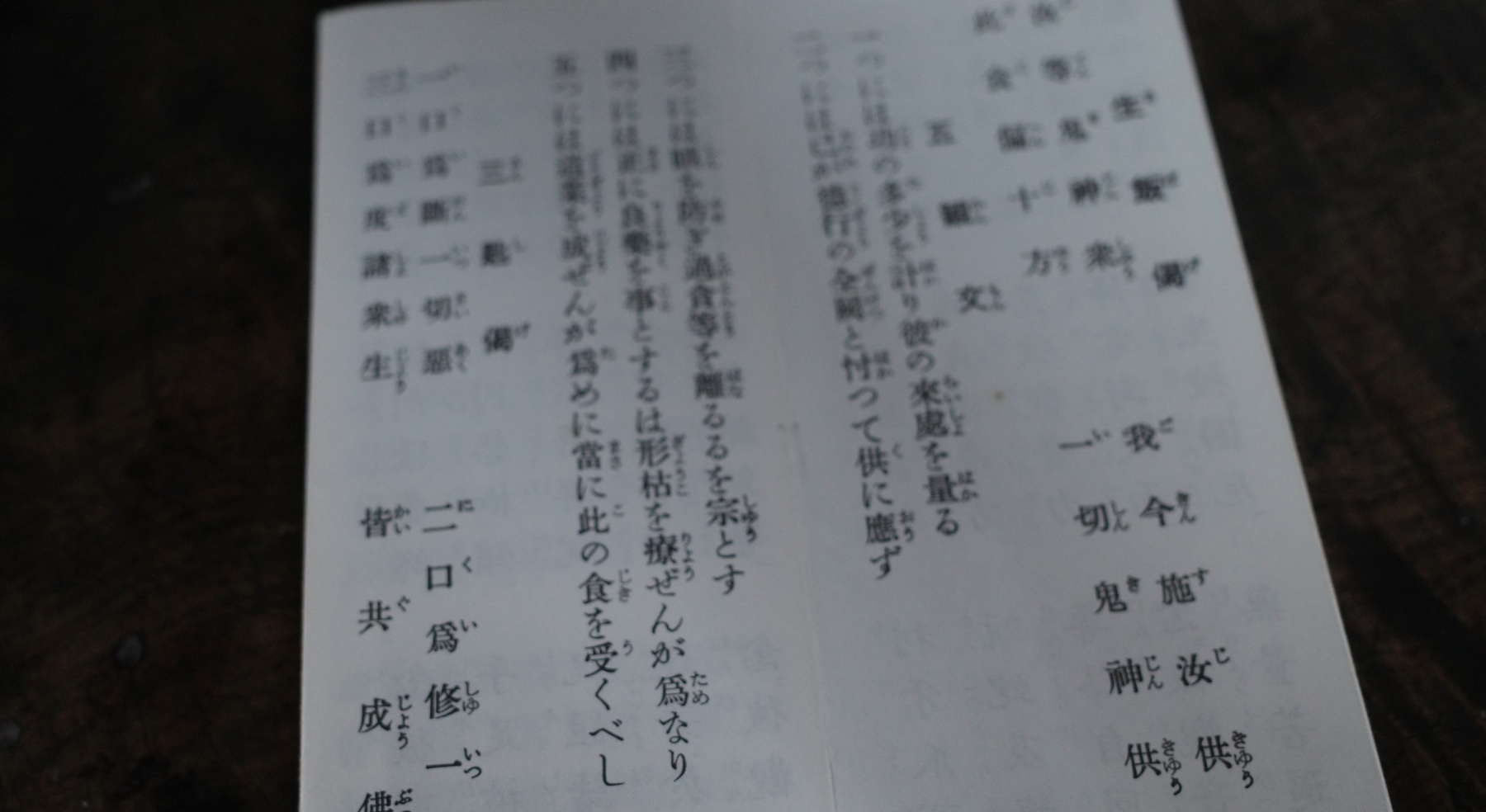
There is also an awareness that taking life creates responsibility. The teaching is not meant to make people feel guilty in a simple way, but to make them conscious of their relationship with food.
That is connected to what I want to do with coffee. I want people to know where it comes from and who produced it, rather than treating it as an anonymous product.
For some people, coffee is treated solely as a caffeine stimulant. But what is its purpose and meaning for you in more of a Buddhist context?
Tea was originally brought to Japan from China by Buddhist monks. It helped them stay awake and continue practising. Monastic life was physically difficult, and tea supported their concentration and allowed them to practise even harder.
Today, coffee can serve a similar purpose. If coffee had existed in Japan in the same way at that time, perhaps the monks would have used coffee too.
How and why have you connected coffee with meditation?
This building is near a Zen temple, and meditation has been very important to me. I believe meditation has great benefits, but I felt it was unfortunate that mainly monks were practising it. Ordinary people could also benefit. It can help people become calmer and more peaceful.
So I wanted to introduce meditation through a daily habit that many people already have: drinking coffee. Why not meditate before drinking your coffee? After meditation, you may taste it more clearly and appreciate it more deeply.
That became the concept of Zen and coffee together. I wanted to create a new culture around a mindful cup of coffee.
Has the idea of Zen Coffee changed since you opened?
Originally, I was not sure it would become a normal café. I mainly wanted to introduce Zen and meditation. Once I found this space, I realised that I could actually teach meditation here.
I also wanted coffee roasting itself to become a practice. I roast by hand rather than relying on a machine. During the roasting, I listen for the cracking sound, smell the changing aroma, and watch the beans change colour. It is a very mindful process.
At first, I had a very small roaster, so I could produce only a limited amount. People did not know the place or understand the concept. Gradually, I opened the front area more clearly as a café, and the project evolved. Now meditation and coffee are the main experience.
What matters to you when you choose the beans behind the coffee you serve to guests?
I care about flavour, of course, but also about how the coffee is produced. I prefer coffee grown without pesticides and in an environmentally responsible way. I also want to work with people who enjoy and take pride in producing it.
Through a friend in Kyoto’s Indonesian community, I found a family in Java producing very good coffee. They wanted to introduce their coffee to people in Japan, and they have been kind and easy to work with. That is the coffee I serve now.
You offer only one bean and one type of coffee—pour over. Why not provide several origins and many different drinks?
I want the experience to remain simple. I want to support one family farm that grows coffee and have an intimate connection with them.
If I work closely with one producer, I can understand the story of the coffee and explain where it came from, how it was grown, and how it tastes. My guests not only get to enjoy a good coffee but also feel connected to and supportive of the farm and the story behind it.
The coffee should taste good, but taste alone is not the whole point. Appreciation and attachment to the producer are also important.
The café is much more than the cup of coffee. There are stones, bells, incense holders, books, and many carefully chosen objects. How did you design the space?
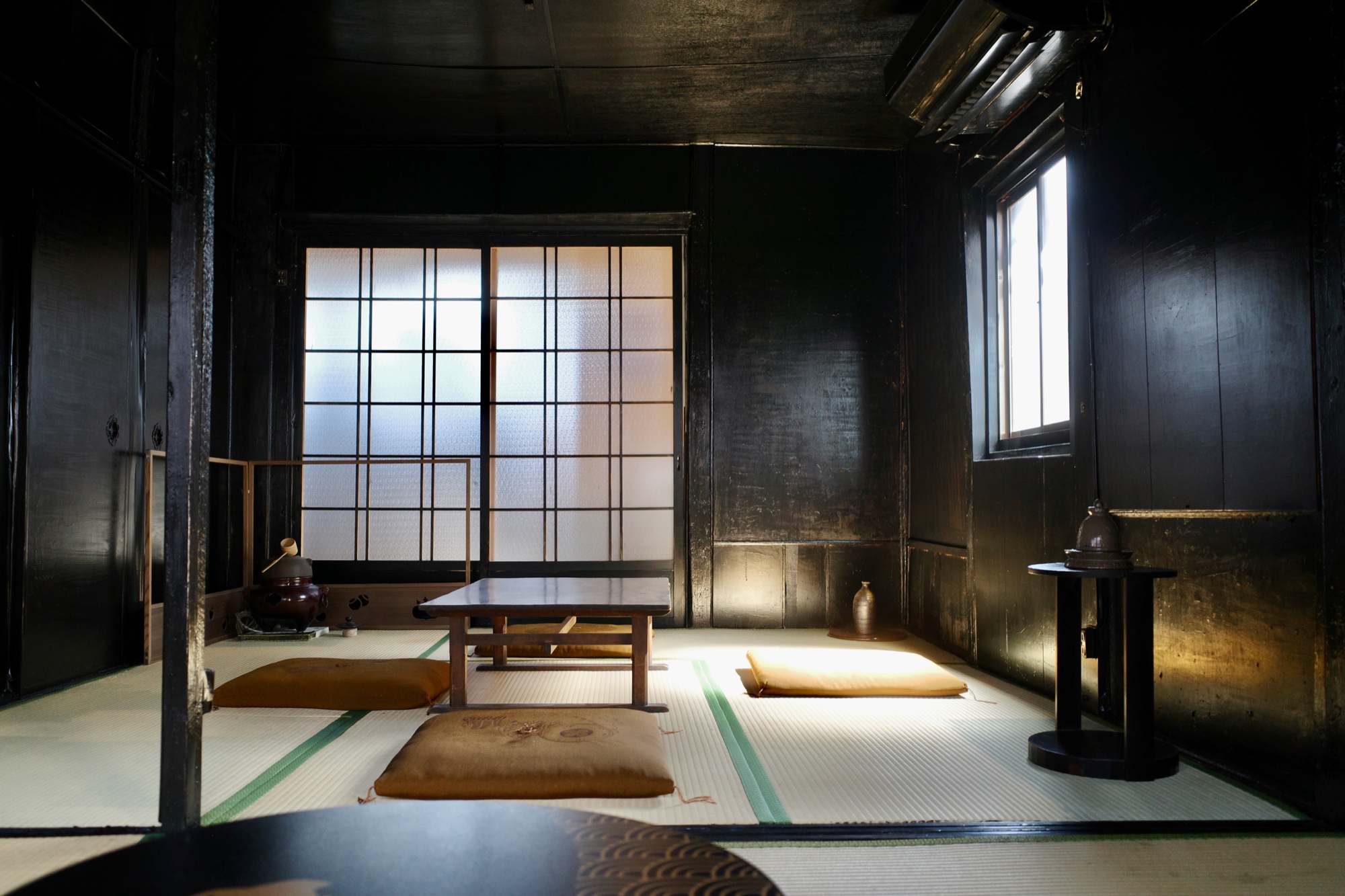
The stone tower was my idea, and it represents balance between the mind and the body. My friend, the French artist Samuel André, created some of the sound and music used here. His music is meditative and quiet. Even outside sounds, such as cicadas, can become part of it.
The bell is a Buddhist instrument used at the beginning of meditation. Some of the stones came from a temple, but many stones used in Japanese temples can come from many places—China, Korea, or distant Japanese islands. The incense holder is an old Korean object. I like Korean design; it often has a strong, simple, masculine quality. Every object in this room has a relationship to the overall idea.
The space is not meant to be overtly religious, but aspects of Zen are present everywhere. I consider the whole place one of my artworks.
“I consider the whole place one of my artworks.”
Many cafés play music. Instead, you have a bell that chimes every so often. What led to this decision?
The sound of an orin temple bell
I wanted people to experience quiet and become mindful of the present moment.
At first, I considered having no sounds at all. But complete silence can sometimes feel uncomfortable in a small café. A small amount of background sound helps create privacy and atmosphere.
What do you want your guests to come here for? Is it a place to talk with friends, or a place to sit in one’s own thoughts?
I do not want to impose rules. They can talk, read, think, or simply drink coffee. I created the space as an expression of my outlook, and I want people to feel it in their own way.
The main thing is that they appreciate the coffee, the farmer, the relationship between the body and food, and the moment itself. I do not explain every object or force people to hear the full story. I simply hope the experience affects them.
When someone leaves, I want them to remember the whole experience—the coffee, the space, the sounds, and the feeling of the moment.
What does the future look like for you?
I am still an artist, but my painting is changing because my life has changed.
In the past, I painted faceless men in suits. Those paintings came from the period when I was working for companies. I do not want to paint that way anymore because I am no longer a salaryman.
People change, and art changes with them. Nothing is permanent. Since opening the café, I have had less time to make art, but things are beginning to settle down. I now have more space and time to develop new paintings and drawings.
I am interested in making scroll paintings, which connects back to my grandfather. I also enjoy design and may create things such as T-shirts. But my main ambition is still to make new paintings.
What does a normal day look like for you?
I meditate in the temple next to the café from 6am until 7:30am. Then I open the café at 8am. I roast coffee when needed, prepare orders, and sometimes send beans to customers.
In the afternoon, when the café is quieter, I draw, paint, sketch, and experiment with new ideas. I enjoy talking with customers in the morning, but I also value the quieter time when I can work alone. The café and the art support each other.
What gives you fulfilment now?
When I compare my life now with the past, the biggest difference is that I no longer have to spend most of my time doing work I do not want to do.
Almost everything I do now is something I have chosen: meditation, coffee, talking with people, designing the space, and making art.
That gives me fulfilment.